
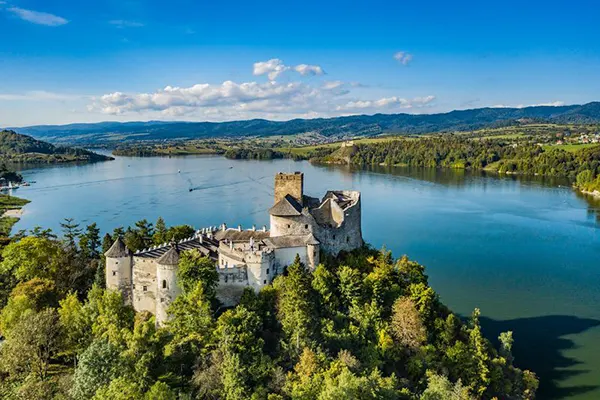
Niedzica Castle (Zamek w Niedzicy): The Inca Treasure Legend and the Dunajec Panorama
Perched above Lake Czorsztyn in southern Poland, Niedzica Castle (also known as Dunajec Castle) is one of those places where documented history and local legend sit side by side. Visitors come for the Gothic walls, the museum interiors, and the views across the water towards the Pieniny Mountains. Yet many people arrive with one specific story in mind: the rumour that an Inca treasure map was once hidden in the castle, recorded using a mysterious quipu.
Where Niedzica Castle Stands and Why the Location Matters
Niedzica Castle rises above the shoreline of Lake Czorsztyn, a reservoir created in the 1990s when the Dunajec River was dammed. The change in landscape made the castle even more photogenic: instead of a steep drop to the river, you now see wide water, distant slopes, and the contrasting ruins of Czorsztyn Castle on the opposite bank. From a practical point of view, this also means the site is easy to combine with a lakeside walk, a short cruise, or a drive through the scenic Pieniny region.
The viewpoint is not just pretty — it explains why this fortress was built here in the first place. In the Middle Ages, the area was a strategic border zone tied to Polish–Hungarian relations and trade routes. The castle’s position allowed it to control movement through the region, and over time it became both a defensive structure and a seat of local administration. Even today, standing on the terraces makes it clear how much the builders relied on the natural terrain for security.
If you want the “classic” panorama, the best angles usually come from across the lake: either near the Czorsztyn Castle ruins or from the roads that follow the shoreline. In good weather, the outline of the fortress looks sharp against the mountains, and at sunset the stone takes on warmer tones that make the entire complex feel more dramatic, even without any ghost stories attached.
Practical Visiting Notes (Tickets, Access, and What You Actually See)
As of 2026, Niedzica Castle operates as a museum complex with timed entry. Tickets are typically sold for specific entry slots, and visits can be done with a guide included in the price or individually, depending on the option you choose. One detail that helps with planning: group sizes are limited, so arriving early during summer weekends can save a lot of frustration.
The main tour usually covers courtyards, chambers that reflect different historical periods, and museum displays tied to the region. You will see exhibits linked to the castle’s owners, border history, and material culture of the nearby Spiš area. The interiors are not “empty ruins” — the visit is designed to feel like stepping through a lived-in fortress, even though reconstructions were completed in the 20th century.
Allow time for the surroundings too. Many visitors underestimate how much the location adds to the experience: walking paths along the lake, viewpoints, and the nearby Czorsztyn Castle ruins make this more than a single-building trip. If you’re travelling without a car, it is still possible by local buses and taxis from Nowy Targ, but checking seasonal connections in advance is sensible outside peak summer months.
A Short History of the Fortress: From Border Stronghold to Museum
The earliest stone construction at Niedzica dates to the early 14th century, and the castle developed over centuries through multiple expansions and renovations. What began as a defensive stronghold grew into a complex of residential wings, towers, and fortified walls arranged around a tight courtyard. This layered architecture is part of what makes the visit interesting: you can often spot changes in style and building logic from one section to another.
For a long time the castle was closely connected to Hungarian noble families and functioned as a border post. Its role was not only military but also economic: the region was tied to routes that linked Hungary with towns further north, and control of movement was valuable. The castle therefore became a focal point for administration and protection of local interests, particularly during periods when borders and allegiances were shifting.
By the 20th century the castle’s condition required major restoration. After World War II, reconstruction work eventually stabilised the site, and by the 1960s it was prepared to function as a museum. Since then, it has been maintained and monitored, including attention to the stability of the hill and the impact of changing water levels after the lake was formed.
What the Museum Collection Tells You About the Region
Inside the museum, the exhibits focus on more than castle gossip. You’ll find historical documentation, archaeological finds, and objects linked to everyday life in the region. This context matters, because Niedzica sits in an area where Polish and Hungarian cultural influences have overlapped for centuries, and the displays make that blend easier to understand.
Visitors often notice collections that feel unexpected for a castle: ethnographic material from the Spiš region, historic weaponry, and decorative elements from different periods. Rather than presenting a single “golden age”, the museum leans into the idea that the castle changed hands repeatedly and survived because it adapted — architecturally and politically — to new realities.
Even if you arrived mainly for the legend, the museum helps ground the place in real history. The stories about noble families, border agreements, and later restoration explain why the castle endured while many other fortresses in the region became only ruins.
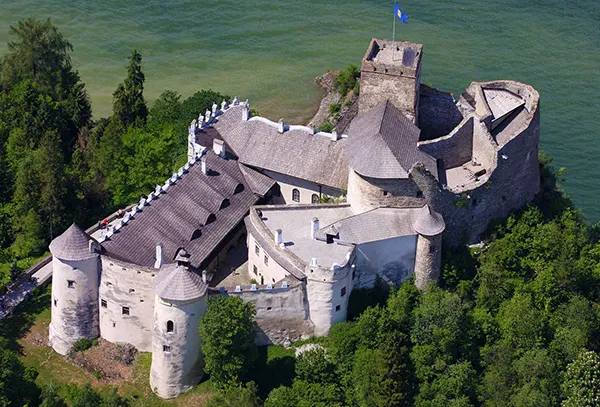
The Inca Treasure Legend: Quipu, a Lost Testament, and Why the Mystery Survived
The most famous tale attached to Niedzica Castle claims that one of its former owners, Sebastián Berzeviczy, travelled to South America in the 18th century and became linked with Inca descendants. According to versions of the story repeated in Polish media and popular history, the line of inheritance eventually brought a secret — sometimes described as a testament, sometimes as coded instructions — back to Europe and into the castle. The rumour took on a life of its own because it ties an unexpected global thread to a very local fortress.
The detail that keeps the legend alive is the quipu: knotted cords used by the Incas for recording information. In the Niedzica narrative, a quipu was supposedly discovered in the 20th century and believed to contain clues to a hidden treasure. The museum itself has referenced the story, noting that the quipu was never translated and was later lost, which is exactly the kind of unresolved ending that turns a rumour into a long-term fascination.
In practical terms, there is no confirmed treasure recovered from the castle, and much of the story cannot be verified through standard historical evidence. But that does not make it worthless: legends like this shape tourism, influence how a place is remembered, and add a layer of atmosphere to the visit. Niedzica manages to balance both sides — presenting documented history in the museum, while also acknowledging that the legend is part of why people keep coming back.
How to Enjoy the Legend Without Falling for Myths
If you’re visiting because of the Inca connection, treat it as a narrative, not a fact. Ask guides how the story is presented today, and pay attention to what is clearly documented versus what is repeated as folklore. This approach keeps the experience fun while still respecting historical accuracy.
It also helps to see the legend as part of a wider tradition. Castles across Central Europe often carry stories of hidden valuables, cursed inheritances, and mysterious documents. Niedzica stands out because its legend reaches beyond the continent, linking a fortress in the Pieniny region with South American imagery that feels completely out of place — and therefore memorable.
Finally, the best way to “take something real” from the tale is to focus on what it reveals about human curiosity. The idea of a lost message, a code no one can read, and a treasure that might never exist is powerful. At Niedzica, you can enjoy that mystery while still leaving with tangible knowledge: about border history, local culture, and one of the most distinctive panoramas in southern Poland.
Popular articles
-
 Krasiczyn Castle: Four Towers, Sgraffito and the History of One of Pol...
Krasiczyn Castle stands in south-eastern Poland, in the village of …
-
 Discovering the Sights of Aarhus: A Blend of History, Culture, and Nature
Aarhus, Denmark’s vibrant second city, offers a charming mix of …
-
 What is the difference between online and offline casinos?
For a long time, gambling enthusiasts have been playing online, …