
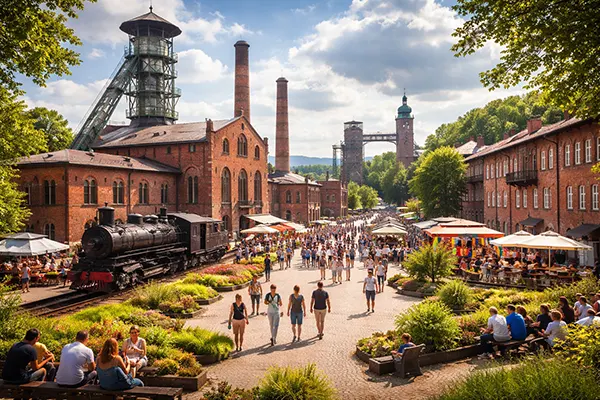
Industrial Heritage Trail and INDUSTRIADA 2026: Exploring Industrial Silesia
Industrial Silesia remains one of the most distinctive regions in Poland, where former mines, steelworks, and factories have been transformed into cultural landmarks. The Industrial Heritage Trail connects dozens of such sites, offering a structured way to understand how heavy industry shaped the region’s identity. In 2026, the INDUSTRIADA festival once again brings these locations to life, combining history, culture, and contemporary events into a single, well-organised route for travellers.
Understanding the Industrial Heritage Trail in Silesia
The Industrial Heritage Trail (Szlak Zabytków Techniki) is an officially recognised cultural route in the Silesian Voivodeship, covering more than 40 historical sites. These include coal mines, power plants, rail infrastructure, and workers’ settlements. Each location reflects a specific stage in the region’s industrial development, from the 19th-century coal boom to the modern transition towards cultural reuse.
What makes the trail particularly relevant in 2026 is its continued adaptation to tourism standards. Most sites now offer guided tours in multiple languages, digital exhibits, and clear visitor infrastructure. Locations such as the Guido Coal Mine in Zabrze or the Silesian Museum in Katowice demonstrate how industrial spaces can be repurposed without losing their authenticity.
The route is not designed as a single linear journey but rather as a network. Travellers can build their own itinerary depending on time and interests. Rail connections across Upper Silesia are efficient, making it possible to visit several sites within a short period while maintaining a comfortable pace.
Key locations worth including in your route
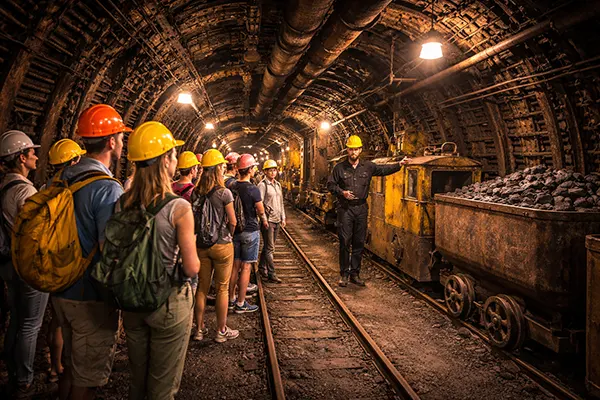
The Guido Coal Mine in Zabrze remains one of the most immersive experiences, allowing visitors to descend underground and see working conditions from different historical periods. The site has been adapted for safety without removing the original structure, which helps maintain a realistic impression of mining life.
The Nikiszowiec district in Katowice offers a different perspective. This early 20th-century workers’ settlement is still inhabited today and showcases red-brick architecture built around community planning principles. It is often included in walking tours that connect social history with industrial growth.
The Tychy Brewery provides insight into industrial production beyond mining. As one of the oldest operating breweries in Poland, it combines heritage with modern manufacturing, offering guided tours that explain both historical processes and current brewing technologies.
INDUSTRIADA 2026: Festival concept and programme
INDUSTRIADA is an annual event organised across the Industrial Heritage Trail, typically held in early summer. In 2026, the festival continues its role as the largest celebration of industrial culture in Central Europe, with dozens of participating sites hosting coordinated activities on a single day.
The programme usually includes guided tours, live performances, workshops, and temporary exhibitions. What distinguishes INDUSTRIADA from standard festivals is its decentralised format. Instead of a single venue, the event spreads across multiple towns, encouraging visitors to move between locations and experience the region as a whole.
Another important aspect is accessibility. Many events are free or require only symbolic entry fees, making the festival suitable for a broad audience. Public transport is often extended during the event, and special routes are introduced to connect key locations efficiently.
How to plan your visit during INDUSTRIADA
Planning ahead is essential due to the scale of the event. The official programme is usually published several weeks in advance, allowing visitors to prioritise locations and book guided tours where necessary. Popular sites such as Zabrze and Katowice can reach capacity quickly.
It is practical to focus on a specific cluster of locations rather than attempting to cover the entire region in one day. For example, combining Katowice, Zabrze, and Gliwice provides a balanced mix of museums, industrial sites, and cultural spaces within a manageable distance.
Accommodation should also be arranged early, particularly in central cities. Katowice serves as the main hub, offering the widest range of hotels and transport connections, making it a convenient base for exploring the festival.
Practical travel tips for industrial tourism in Silesia
Travelling through Silesia in 2026 is straightforward due to ongoing infrastructure improvements. The regional rail network (Koleje Śląskie) connects major towns with frequent services, while local buses complement access to smaller sites along the Industrial Heritage Trail.
Visitors should consider purchasing regional transport tickets, which allow flexible travel across multiple cities. This is particularly useful during INDUSTRIADA when moving between locations becomes part of the overall experience rather than a logistical challenge.
Weather conditions in early summer are generally mild, but some industrial sites maintain lower temperatures, especially underground. Wearing layered clothing ensures comfort throughout the day, particularly when transitioning between indoor and outdoor environments.
Combining industrial heritage with other attractions
Silesia offers more than industrial tourism. Cities like Katowice have developed a strong cultural scene, including modern concert halls, galleries, and public spaces that complement the historical context of the region.
Nearby natural areas such as the Silesian Park provide an alternative setting for relaxation between visits. This large urban park includes cycling paths, green zones, and cultural institutions, offering a contrast to the industrial landscape.
Food culture in the region also reflects its heritage. Traditional Silesian dishes, often served in restored industrial buildings, add another layer to the travel experience. Local restaurants frequently combine historical interiors with contemporary cuisine, making them worth including in any itinerary.
Popular articles
-
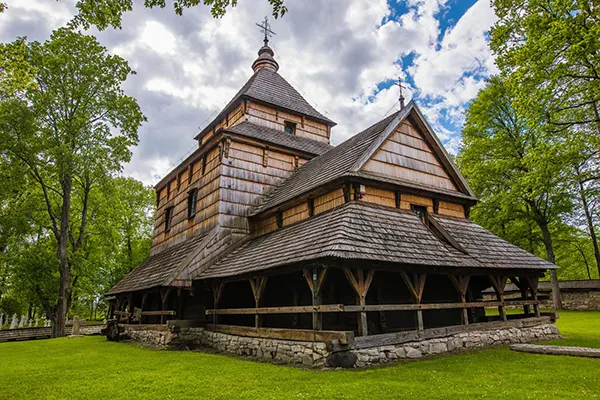 Wooden Tserkvas of the Carpathian Region: A Route through Radruż, Chot...
The wooden tserkvas of south-eastern Poland are not simply picturesque …
-
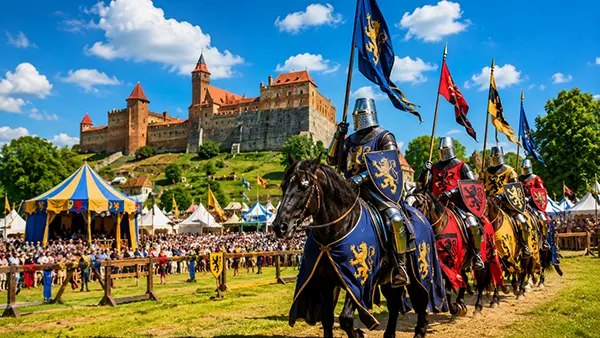 Historical Reconstructions and Knight Festivals in Poland 2026: A Trav...
Poland remains one of Europe’s leading destinations for historical reenactments …
-
 Biskupin: The Archaeological Settlement That Reveals Poland’s Ancient ...
Biskupin is one of the most important archaeological sites in …