
Silver Mountain Fortress (Srebrna Góra): The Largest Mountain Fortress in Poland — A Detailed Guide for 2026
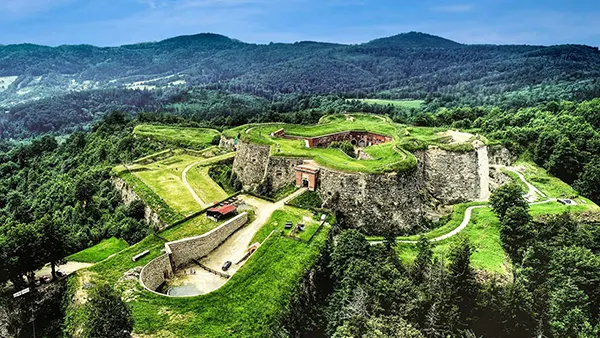
Rising above the Owl Mountains in Lower Silesia, Silver Mountain Fortress (Twierdza Srebrna Góra) remains the largest mountain fortification in Poland and one of the most impressive defensive complexes in Europe. Built in the eighteenth century by the Kingdom of Prussia, it was designed to control strategic routes between Silesia and Bohemia. Today, it stands not as a relic frozen in time, but as a carefully preserved historical monument open to visitors throughout the year. This guide provides accurate, up-to-date information for 2026, including historical background, architectural highlights, practical visiting advice and nearby attractions.
The History and Strategic Importance of Silver Mountain Fortress
Construction of the fortress began in 1765 under King Frederick II of Prussia, better known as Frederick the Great. After the Silesian Wars, Prussia needed a strong defensive point to protect newly acquired territories from potential Austrian counterattacks. The mountainous terrain near Srebrna Góra offered a natural defensive advantage, and engineers transformed the hilltops into a vast military complex.
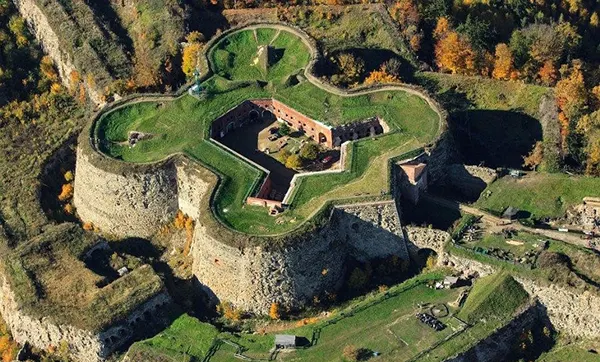
The project took more than a decade to complete and involved thousands of soldiers and workers. By 1777, the fortress consisted of six major bastions and several auxiliary forts connected by walls, tunnels and defensive lines. The central Donjon, a massive keep capable of housing up to 4000 soldiers, became the heart of the complex. Its design allowed it to function as a self-sufficient stronghold in the event of a prolonged siege.
Although the fortress was never captured in battle, it did play a defensive role during the Napoleonic Wars. In 1807, French forces laid siege to the stronghold, but the Prussian garrison successfully resisted. In later centuries, the fortress gradually lost its military significance and served various purposes, including as a prison in the nineteenth century and a POW camp during the Second World War.
Architectural Scale and Engineering Features
Silver Mountain Fortress covers approximately 100 hectares, making it the largest mountain fortification in Poland. The complex was designed to adapt to the steep slopes of the Owl Mountains, with defensive walls following the natural contours of the terrain. This integration of architecture and landscape is one of the reasons the site is considered a masterpiece of eighteenth-century military engineering.
The Donjon is the most striking structure within the complex. Built on a circular plan and surrounded by thick masonry walls, it includes internal courtyards, casemates, storage areas and artillery positions. The structure was designed to withstand heavy cannon fire, and many of its original brick and stone elements remain intact in 2026 thanks to ongoing conservation efforts.
Underground corridors, vaulted chambers and hidden passageways add to the fortress’s defensive sophistication. These features allowed soldiers to move safely between sections and ensured protection against bombardment. Today, guided tours often include selected underground sections, offering visitors a rare insight into eighteenth-century military logistics.
What to See at the Fortress in 2026
In 2026, Silver Mountain Fortress operates as a cultural and educational site managed by the Twierdza Srebrna Góra Cultural Park. The Donjon is the main visitor route, where guests can explore barracks, artillery positions, exhibition rooms and panoramic viewpoints overlooking Lower Silesia. The views from the upper terraces stretch across mountain ridges and valleys, particularly impressive in late spring and early autumn.
Historical exhibitions present artefacts related to the Prussian army, daily life of soldiers and the fortress’s later uses. Displays are available in Polish, with supplementary materials in English and German. Seasonal reenactments and living history events are organised several times a year, often during long weekends and summer months.
Another notable part of the complex is Fort Ostróg, located slightly apart from the central Donjon. It can be reached on foot via marked trails. The route itself is part of the experience, combining historical exploration with moderate hiking in the surrounding mountains.
Guided Tours, Tickets and Practical Information
As of 2026, the fortress is open year-round, though opening hours vary by season. During the high season (typically May to September), the site operates daily from late morning until early evening. In winter months, hours are shorter and weather conditions may limit access to certain outdoor sections.
Tickets can be purchased on site or online through the official website of Twierdza Srebrna Góra. Standard adult tickets usually range between 30 and 40 PLN, with reduced prices for children, students and seniors. Family tickets and group packages are also available. Guided tours are strongly recommended, as independent access to some areas is restricted for safety reasons.
Comfortable footwear is essential, as the terrain includes cobbled paths, steep inclines and uneven surfaces. The altitude and open exposure mean that weather conditions can change quickly. Visitors should bring appropriate clothing, especially outside the summer season.
How to Get There and What to Explore Nearby
Silver Mountain Fortress is located in the village of Srebrna Góra in Lower Silesian Voivodeship, approximately 80 kilometres south of Wrocław. The most convenient way to reach the site is by car, with parking areas available near the entrance. Public transport connections exist via regional buses from towns such as Ząbkowice Śląskie and Kłodzko, though schedules may be limited.
The surrounding Owl Mountains form part of the Sudetes range and offer well-marked hiking and cycling trails. Many visitors combine a trip to the fortress with outdoor activities, particularly along the former railway viaducts and scenic forest routes. The area is also popular among history enthusiasts interested in other Lower Silesian landmarks.
Within a short driving distance, travellers can visit Kłodzko Fortress, the medieval town of Ząbkowice Śląskie, and the UNESCO-listed Churches of Peace in Świdnica and Jawor. Lower Silesia is known for its dense concentration of castles and palaces, making the region suitable for multi-day cultural itineraries.
Best Time to Visit and Travel Tips
The most favourable period to visit is between May and October, when weather conditions are stable and visibility from the fortress walls is at its best. Summer months bring more visitors, particularly during reenactment events, so early arrival is advisable for those seeking a quieter experience.
Autumn offers a different atmosphere, with colourful forests surrounding the stone bastions. Photographers often prefer this season due to softer light and fewer crowds. Winter visits are possible but require caution, as icy paths may limit access to certain areas.
For those planning an extended stay, nearby guesthouses and agritourism farms provide accommodation in the Owl Mountains region. Booking in advance is recommended during peak tourist periods. Combining historical exploration with local cuisine and mountain walks makes Silver Mountain Fortress more than a single attraction — it becomes a full regional experience rooted in authentic Polish heritage.
Popular articles
-
 Elbląg Canal: How to See Boats Travelling Over Land in Poland
The Elbląg Canal remains one of the most unusual engineering …
-
 Przemyśl Fortress — One of the Largest Defensive Complexes in Europe
Przemyśl Fortress in south-eastern Poland remains one of the most …
-
Silver Mountain Fortress (Srebrna Góra): The Largest Mountain Fortress...
Rising above the Owl Mountains in Lower Silesia, Silver Mountain …